
The Elephant in the Writing Room
AI is changing how songs are made, but honest feedback still helps us decide what they should become.
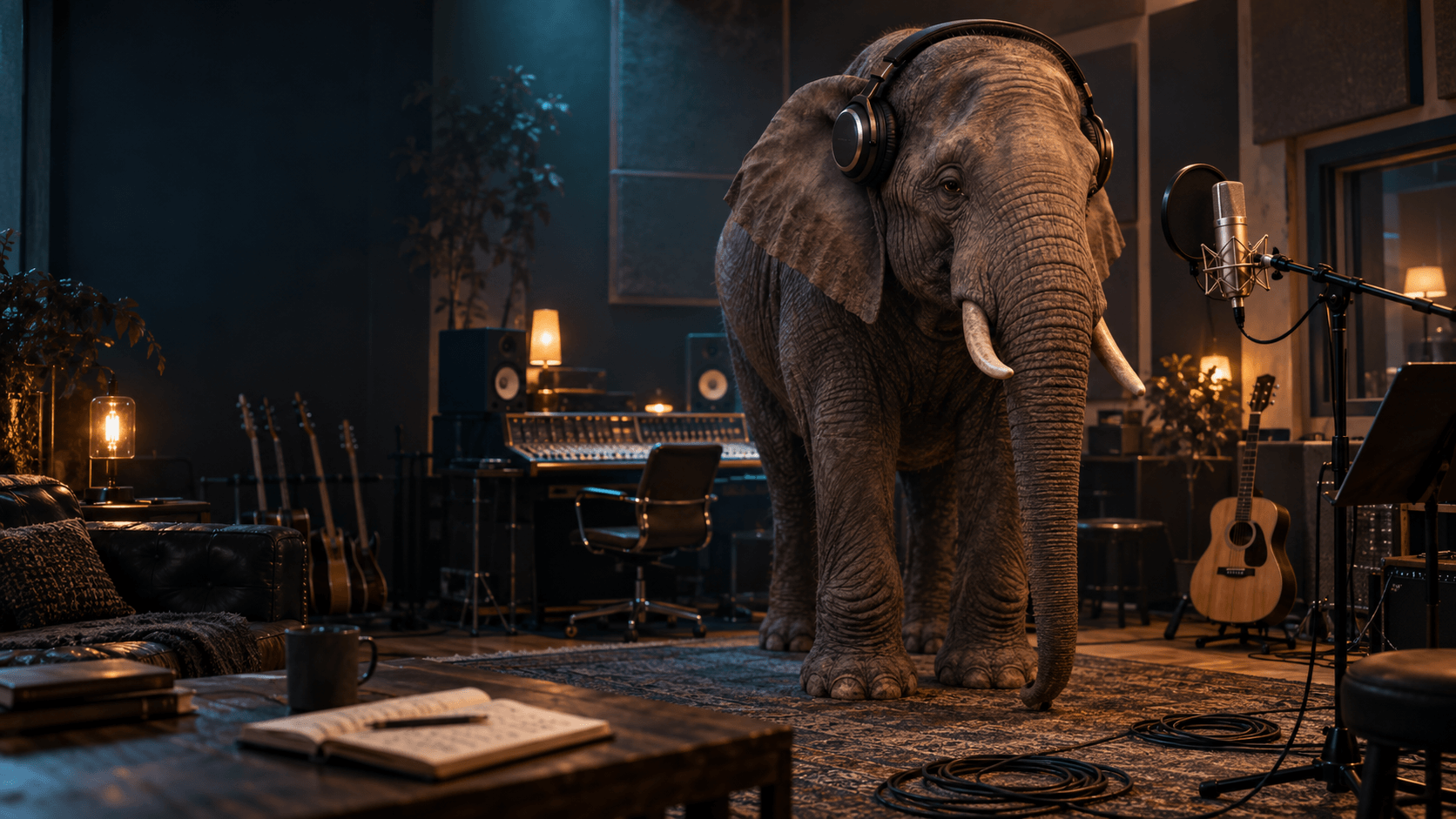
There’s an elephant in the room.
But that’s obvious.
What does the room look like? That’s the important part.
AI has arrived in music with astonishing speed. It is beautiful, unsettling and impossible to ignore. It can help someone find a missing chord, explore an arrangement or hear what a song could become. It also raises serious questions about authorship, consent, copyright, imitation and what we may surrender when convenience begins making our creative decisions for us.
I’m guilty. You’re guilty. In one way or another, we are all being pulled by a force that promises greater outcomes, sometimes at the risk of giving up something larger than ourselves: the imperfect, difficult and deeply human act of creating.
And yet there is another side.
A songwriter may have a powerful lyric but no training in music theory. A musician may hear an entire arrangement internally but lack the production skills to realise it. Sometimes a writer simply needs one new idea, such as a different chord, tempo, harmony, instrument or direction, to break through a wall. AI offers an extraordinary arsenal of flexible possibilities for visualising where a song could go.
Stories are already emerging of people using these tools in profoundly human ways, including an older woman in a nursing home turning her poems and lyrics into songs she can preserve and share with her family. AI can make musical expression more accessible, help create demos, suggest arrangements, translate ideas between styles, support people with physical limitations and give unfinished words a voice.
That matters.
But the tool should never become the reason we stop learning, listening or creating. Pick up your instrument. Sing badly into your phone. Write the awkward verse. Make the rough recording. Let the song begin with you.
Why TuneCheck is welcoming AI music
TuneCheck was created around a simple belief: songs improve when their creators receive honest, thoughtful feedback.
That remains the point.
Whether a track began as a voice memo, was recorded with a full band, used AI for one part of the process or was substantially generated with AI, feedback can reveal what software cannot decide for you: Does the chorus connect? Does the story feel true? Is the arrangement carrying the emotion? Where does the listener lose interest, and what makes them press play again?
Rather than pretending AI music is not coming, or forcing it into the shadows, TuneCheck is making space for it with transparency.
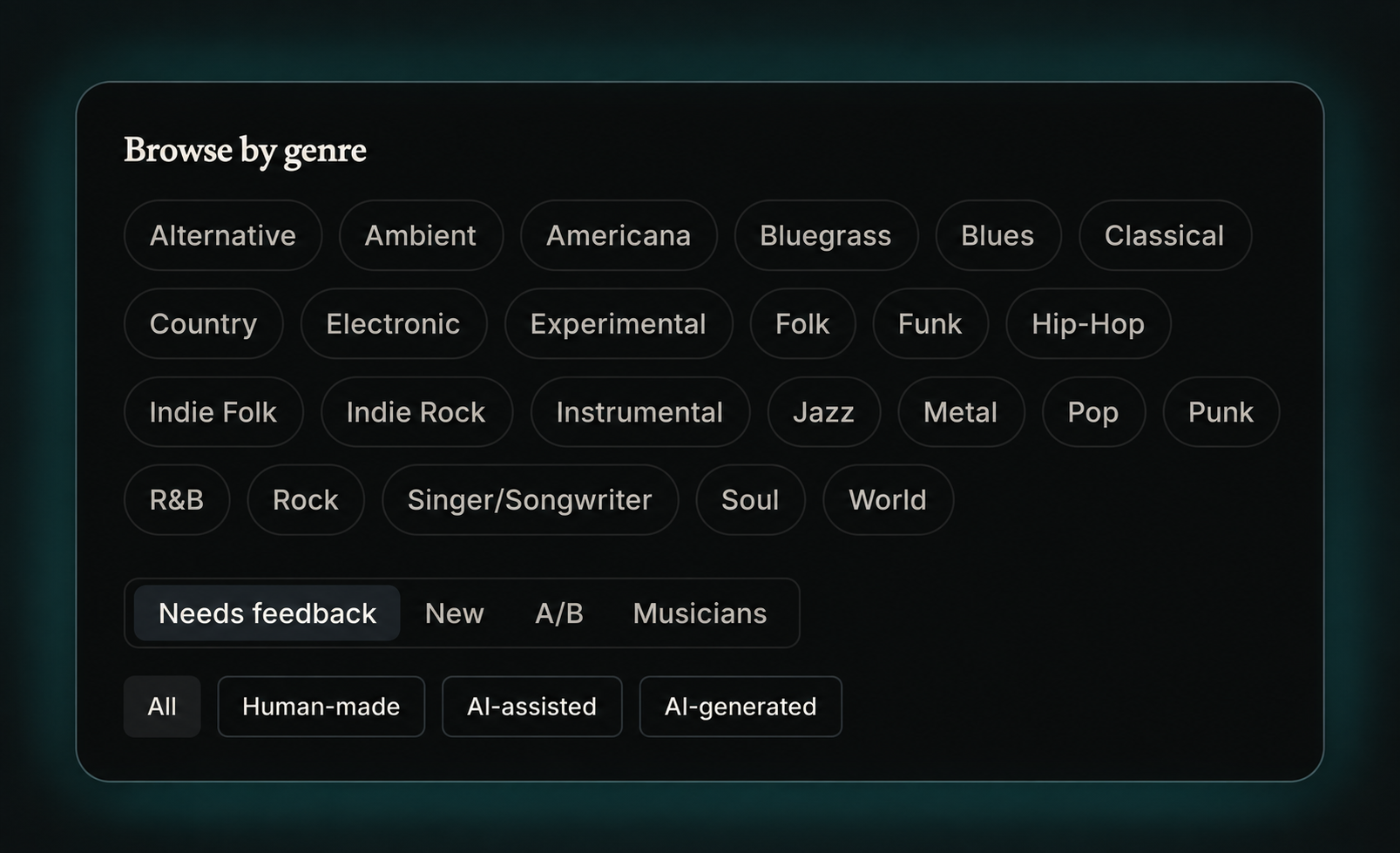
Before uploading a TuneCheck, creators must identify how AI was involved and confirm that they have the necessary rights and permission to share the track. That disclosure becomes part of the song’s provenance: a clear account of where the music came from and how it was made.
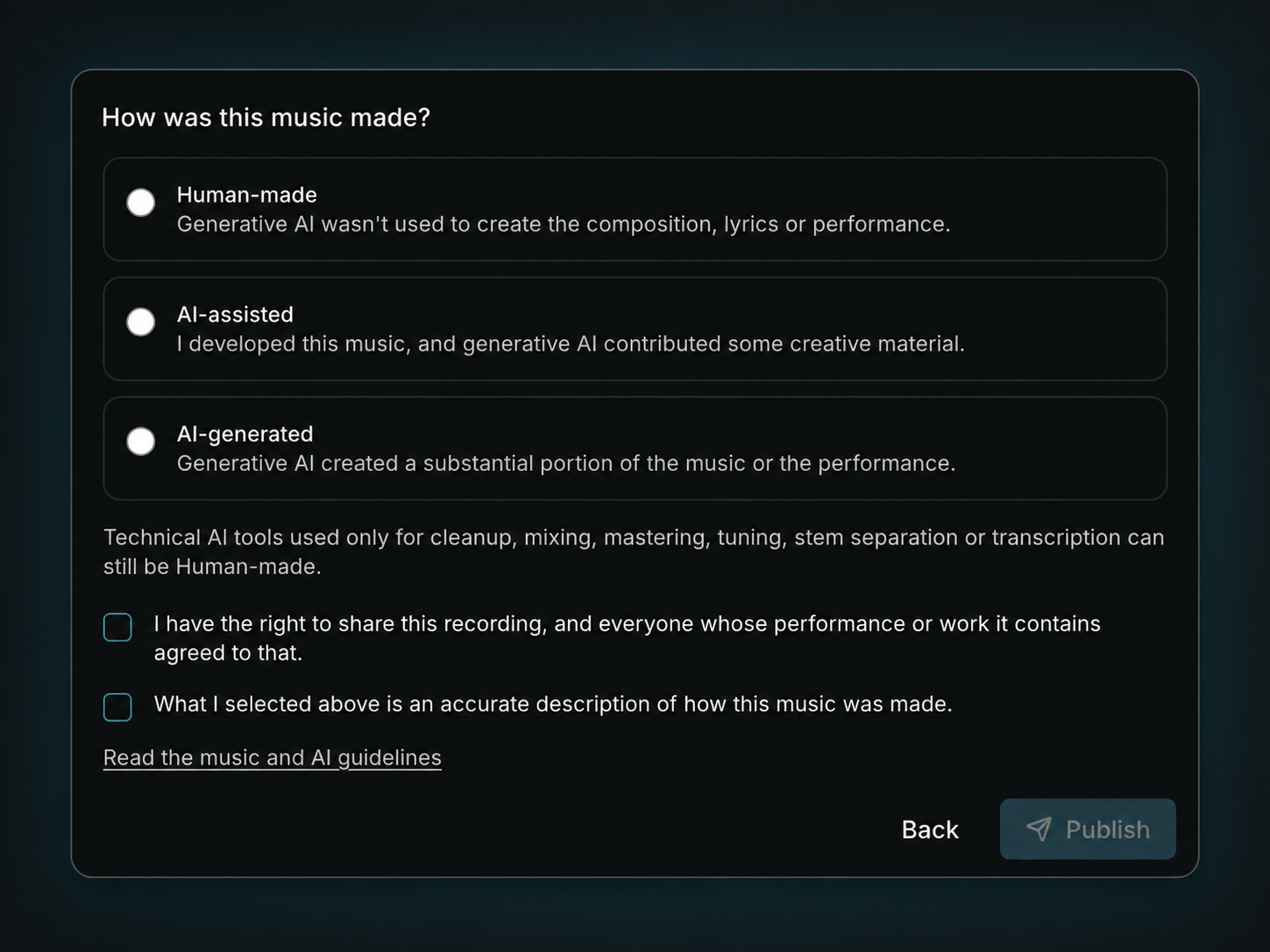
Provenance is not a verdict on whether a song is “real.” It provides context. On TuneCheck, listeners can see whether music was AI-assisted or generated with AI, and search accordingly. Nobody has to guess, and nobody has to hide.
Creators can also use feedback to compare different stages of an idea. You might A/B test a raw voice-and-guitar recording against an AI-generated arrangement, compare two productions of the same song or discover that the imperfect original carries something the polished version lost. The feedback is not there to crown a winner. It is there to help you understand the choices in front of you.
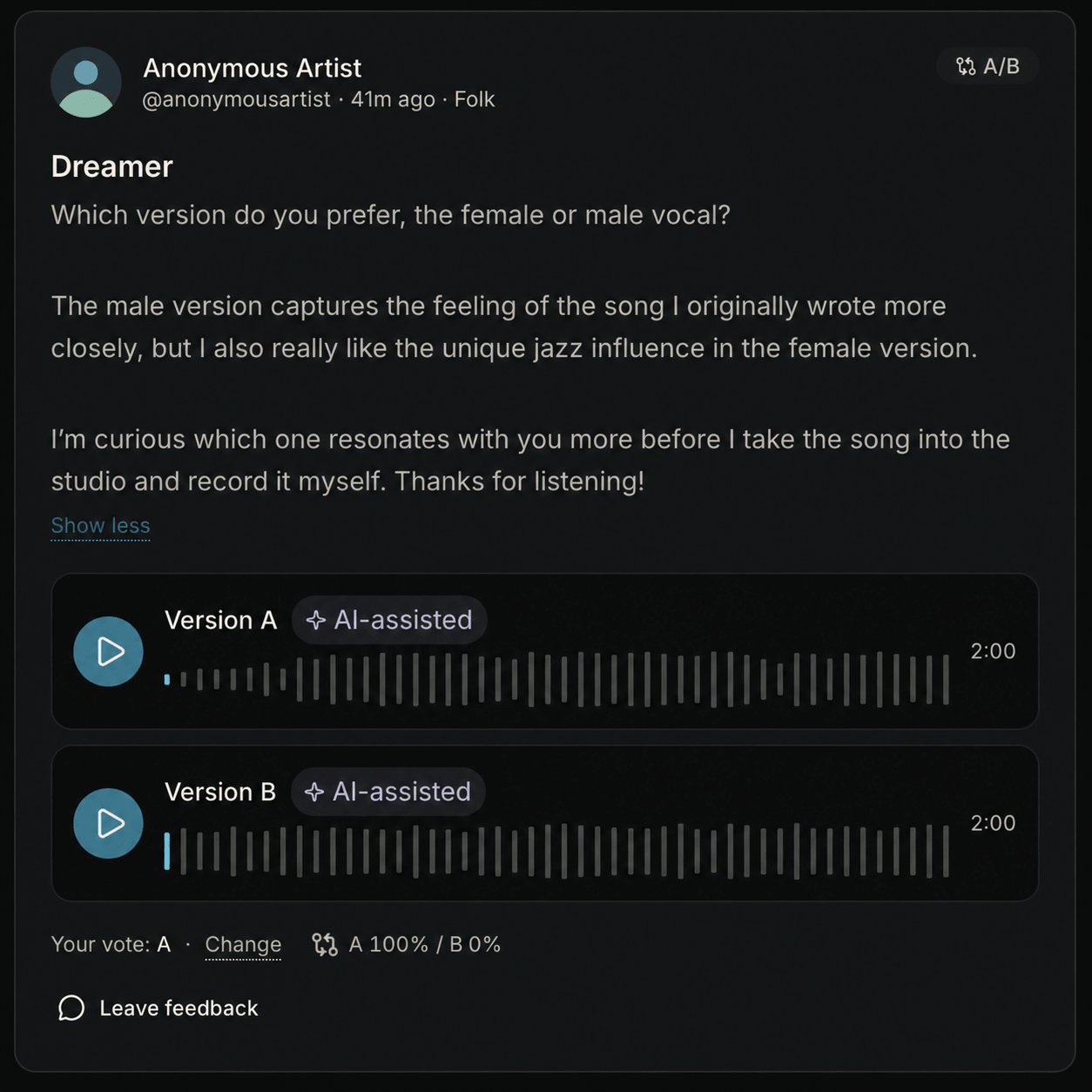
Because sometimes a technically impressive version says less. Sometimes the robot reveals a possibility you could not hear before. Sometimes the answer is to go back, pick up the guitar and play it again.
Like listening to music in a foreign language, we can be left associating the sound of a word with a meaning only we understand. That mystery, the space between what a creator intended and what a listener received, is precisely where useful feedback lives.
The elephant has only just walked in. It feels like yesterday.
Let’s see how TuneCheck develops alongside it.
Thank you for being part of this journey. Whatever path your song took, whether written from scratch, captured as a voice recording on your phone, shaped with ideas fed through to the robots or created through some combination of all three, I hope you receive the honest, human feedback it deserves.
And I hope you keep creating.
Comments
Join the conversation. Sign in or create a free TuneCheck account to leave a comment.